
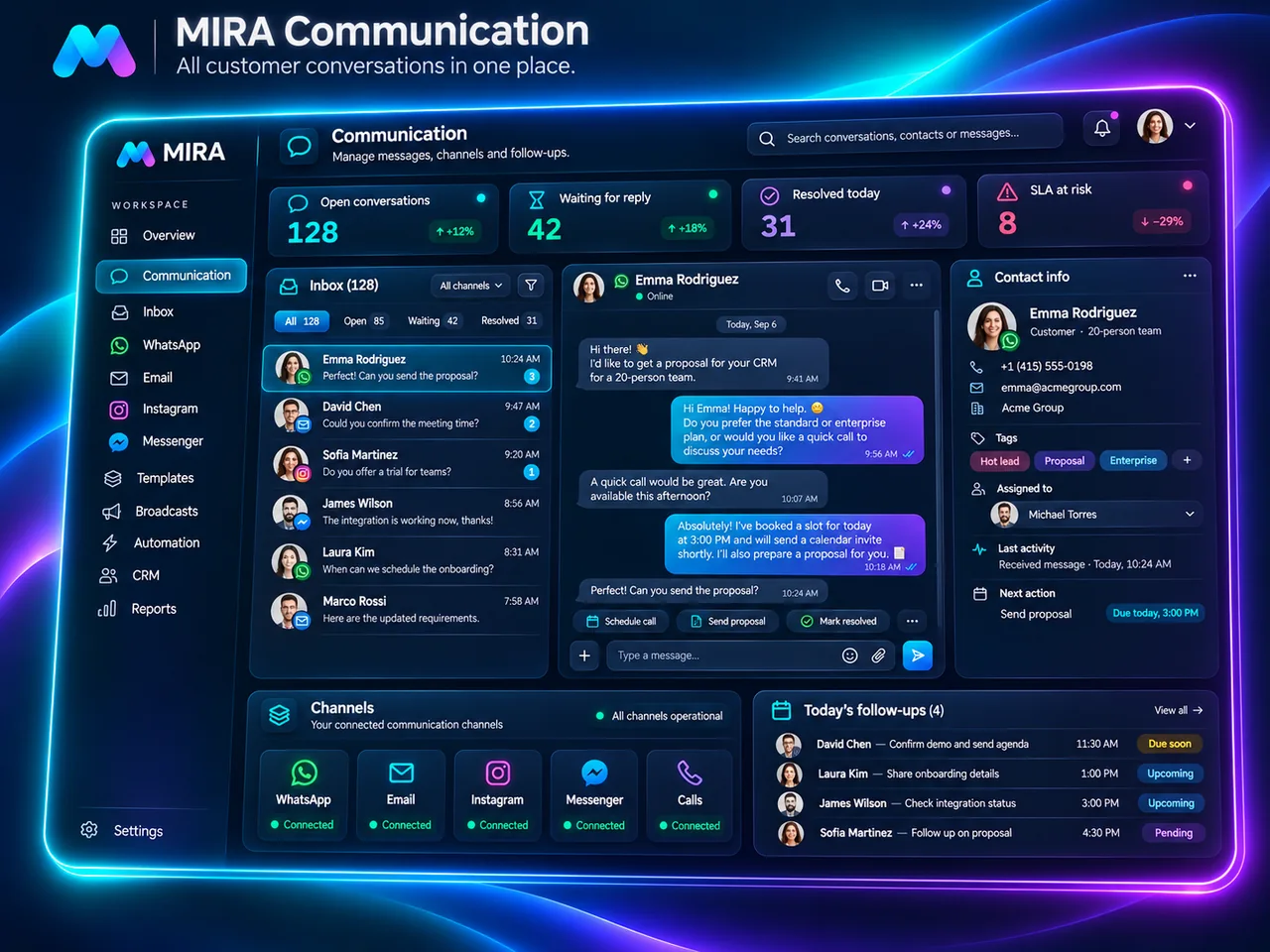
Multichannel communication gives customers several ways to reach a business. Omnichannel communication aims to preserve the relationship and conversation context as customers move between those ways. The useful distinction is continuity, not the number of channel icons on a website.
A team can offer email, messaging and social media while still handling each in a separate silo. The result may be more reach without a better experience for either the customer or the people responding.
Follow the customer, not the application
Consider an illustrative journey: a person asks a question on social media, later sends an email and finally calls about the same issue. A teammate needs to understand that these interactions may belong to one ongoing request.
Do not assume matching a name is enough to connect identities. Your process needs an appropriate way to confirm the person and avoid combining unrelated records. Shared context is useful only when it is the right context.
Make ownership visible
An inbox becomes difficult to manage when several people see a conversation but nobody owns the next response. Decide how an incoming message is assigned, when assignment can change and what happens if the owner is unavailable.
A handoff should summarize the request, what has already been answered, what remains unresolved and any promise made to the customer. This is more actionable than transferring an unexplained thread.
Keep internal discussion separate from customer replies
Colleagues often need to discuss a response before sending it. That internal coordination has a different audience from the customer conversation and should be clearly distinguished in both process and interface.
In MIRA terminology, Communication is the external customer inbox; Relay is internal team messaging. The distinction helps teams reason about who can see a message and which conversation needs an external response.
Check channel constraints before committing
Different providers have their own permissions, account requirements and delivery rules. Ask which channels are actually supported, what setup is required, where attachments and history are retained, and whether provider fees apply.
- Confirm channel availability for your account and region.
- Test what history is visible during a handoff.
- Decide how failed or delayed messages are surfaced.
- Understand which conversations can be linked to a customer record.
An integration-roadmap logo is not a production capability. Require confirmation and a representative test before moving a live customer workflow.
Design a useful escalation path
Some conversations need a subject-matter expert, a manager or a phone call. Define when escalation is appropriate and how the original owner knows whether it has been resolved. The customer should not have to repeat an entire history simply because the team changed the channel.
AI may help prepare a summary, but an important promise or decision still needs the appropriate review. A short, accurate handoff is better than an automated summary that omits the customer's actual request.
Assess continuity with one realistic test
Take a representative inquiry across two channels and two teammates. Ask the second teammate to explain the current request, identify the next owner and find the latest commitment. Record where they must ask for information outside the workspace.
MIRA is being designed around connected customer context, with channel availability confirmed during early access. The goal of your evaluation should be an understandable journey for the customer and the team, rather than simply collecting more channels.
Sources & further reading
Primary references for readers who want to explore the concepts further. Examples and evaluation checklists are MIRA editorial analysis.
Practical explanations from the team building MIRA. MIRA is in early access; product and integration availability must be confirmed during onboarding. Questions or corrections? Contact us.