
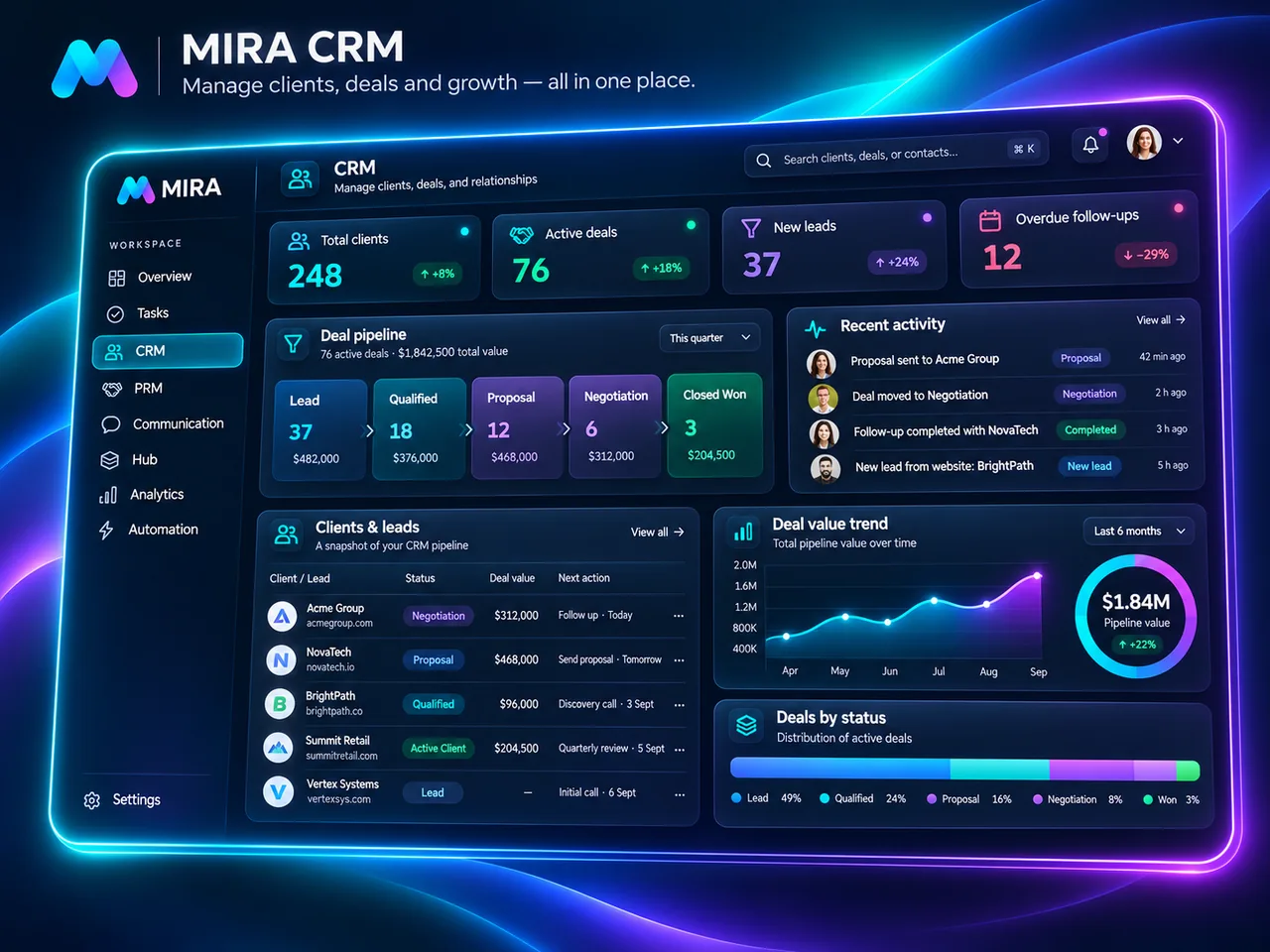
A CRM becomes useful when a teammate can open a customer record, understand what has happened and know what to do next. A long list of features is less helpful if the team still has to search three inboxes to reconstruct one relationship.
For a growing team, the first question is therefore operational: what information must stay connected from the first inquiry to an ongoing customer relationship? This guide offers a practical way to turn that question into a buying and implementation checklist.
Map one journey before comparing features
Choose a real type of inquiry your team receives regularly. Write down where it arrives, who first responds, how it is qualified, what makes it move forward and how a colleague takes over. Note each place where context is copied or lost.
An illustrative service-business journey might start with a website inquiry, move to a phone conversation, require a proposal and continue with onboarding. The CRM should help a teammate follow that sequence. A dashboard alone cannot tell you whether the underlying handoffs are clear.
Define the customer record your team actually needs
Separate identity, relationship history and next actions. Identity includes the contact and organization. History includes meaningful conversations and decisions. Next actions connect an owner to a specific follow-up.
Start with fields that someone uses to make a decision. For each field, ask who maintains it and what happens when it is missing. If nobody can answer, the field may be adding administration rather than understanding.
- Make record ownership explicit.
- Agree which interactions belong in the shared history.
- Define how duplicate contacts will be reviewed.
- Keep personal information limited to what the work requires.
Test a handoff, not just a happy path
During evaluation, ask one colleague to handle the first inquiry and another to continue it. The second person should be able to identify the request, previous response and next promise without an explanation outside the system.
Then try an exception: the assigned teammate is away, an email address changes or the same person contacts you through another channel. These moments reveal whether the workspace supports your process or expects the process to fit an attractive demo.
Evaluate communication and tasks together
A customer record that cannot explain the latest conversation becomes stale quickly. A conversation without an owner or next step becomes easy to overlook. Evaluate how records, messages and tasks connect rather than treating each as an independent feature.
Also check what happens when a task is completed, reassigned or overdue. Decide who sees unresolved work and how escalation works. Software can make those decisions visible, but the team must agree what the decisions are.
Plan a small, deliberate rollout
Choose one team and one bounded journey. Clean a manageable set of records, agree the operating rules and give someone responsibility for feedback. Review examples of both useful and confusing records before expanding.
Useful measures might include whether records have a clear owner, whether promised follow-ups are visible and whether a handoff requires a separate explanation. Establish a baseline from your own work before claiming improvement.
Where MIRA fits
MIRA is being developed to connect CRM, conversations, tasks, marketing and AI context in one workspace. It is in early access, and migration or integration support should be confirmed for your case. Use the framework above to discuss your needs rather than assume every workflow is already available.
The central test is simple: can another teammate understand this relationship and take a responsible next step? Build your evaluation around that question.
Sources & further reading
Primary references for readers who want to explore the concepts further. Examples and evaluation checklists are MIRA editorial analysis.
Practical explanations from the team building MIRA. MIRA is in early access; product and integration availability must be confirmed during onboarding. Questions or corrections? Contact us.